Home » Empowering young people to challenge vaping culture
Empowering young people to challenge vaping culture
Learning what’s in a vape and how tobacco companies have insidiously marketed them to young people can “blow your mind,” according to Elizabeth Spencer, CEO of the Literature Centre in WA. However, she notes that while many young people understand the risks, the message is not getting through.
“Many young people are aware of the dangers and health impacts but simply hitting them with the facts is not enough,” Elizabeth said. “A more subtle approach is needed to get them thinking about their motivations and why they’re still doing this.”
This insight led to the Literature Centre’s groundbreaking pilot project, The Influence Lab: Arts Against Vaping Pilot.
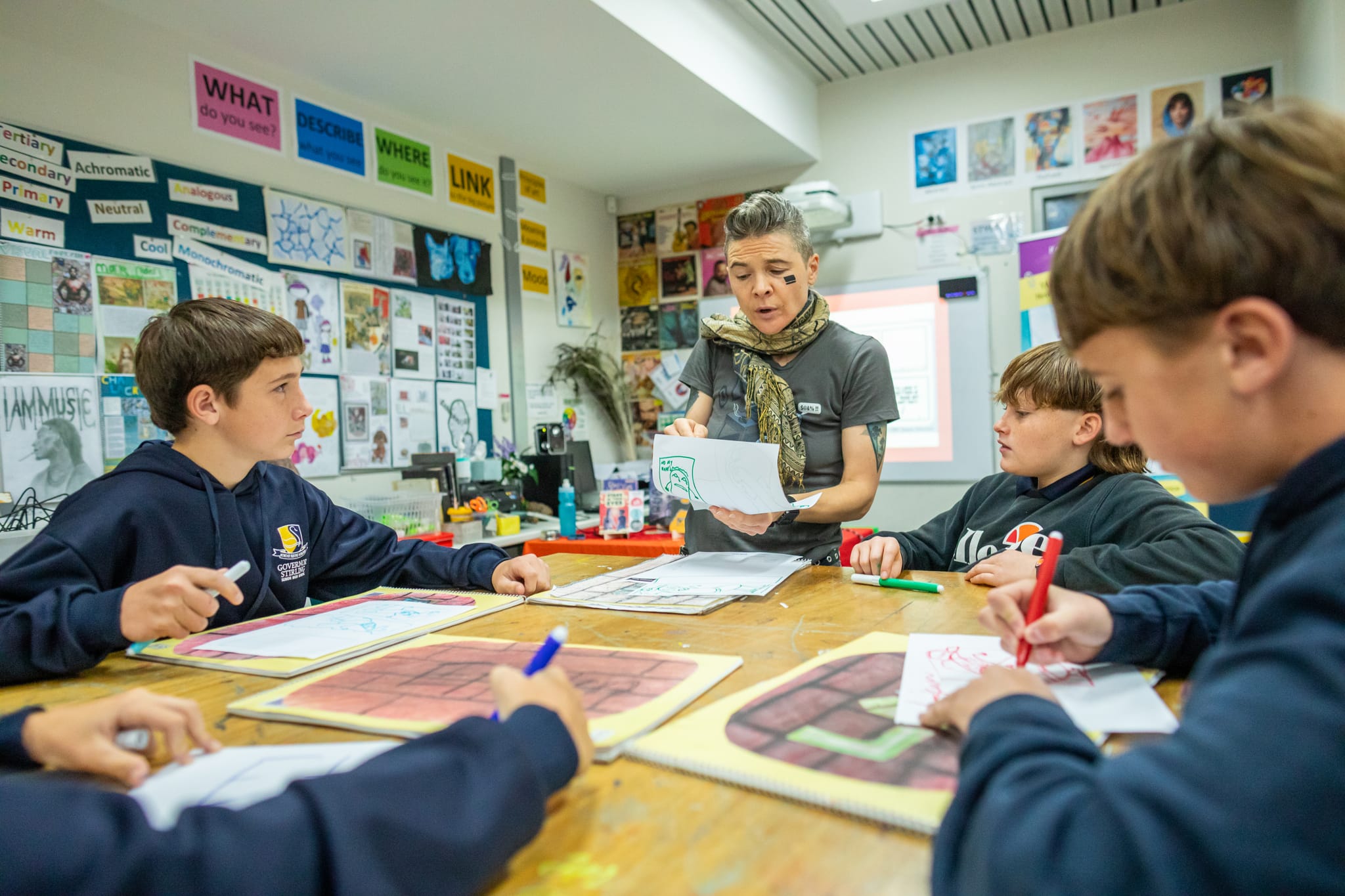
The Literature Centre's Influence Lab: Arts Against Vaping pilot program at Govenor Stirling Senior High School
The project addresses this gap by giving young people the tools to analyse vaping culture and misinformation and to find their own voices to create and share authentic stories with their peers.
Supported by Healthway, the program has been developed over 18 months in partnership with Cancer Council WA and four schools: Roleystone Community College, Governor Stirling Senior High School, Lakelands Senior High School and Ballajura Community College.
The pilot will engage about 300 students in Years 7 to 10 through creative residencies, artist led workshops and student led exhibitions, culminating in a public exhibition at the Perth Cultural Centre.
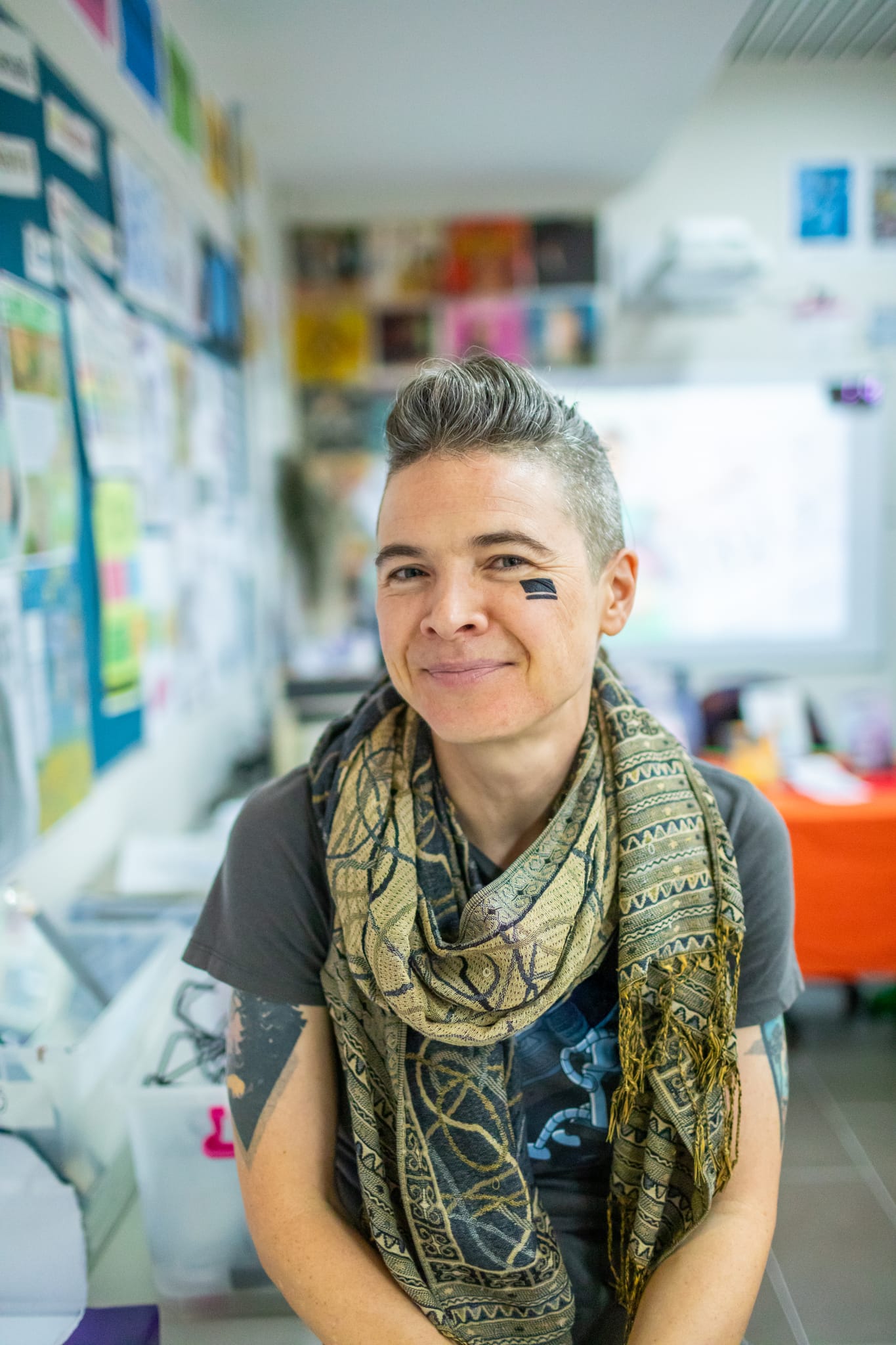
Aska, Artist
Artist Aśka, a visual storyteller, comics maker, science communicator and a passionate advocate of visual literacy, is part of the program.
“One reason I’m drawn to images and comics is their ability to open a different door to the brain, but that can also be extremely manipulative,” she said.
“Visual literacy is about looking at who made it, why they made it and what effect it has on me, rather than accepting it at face value.”
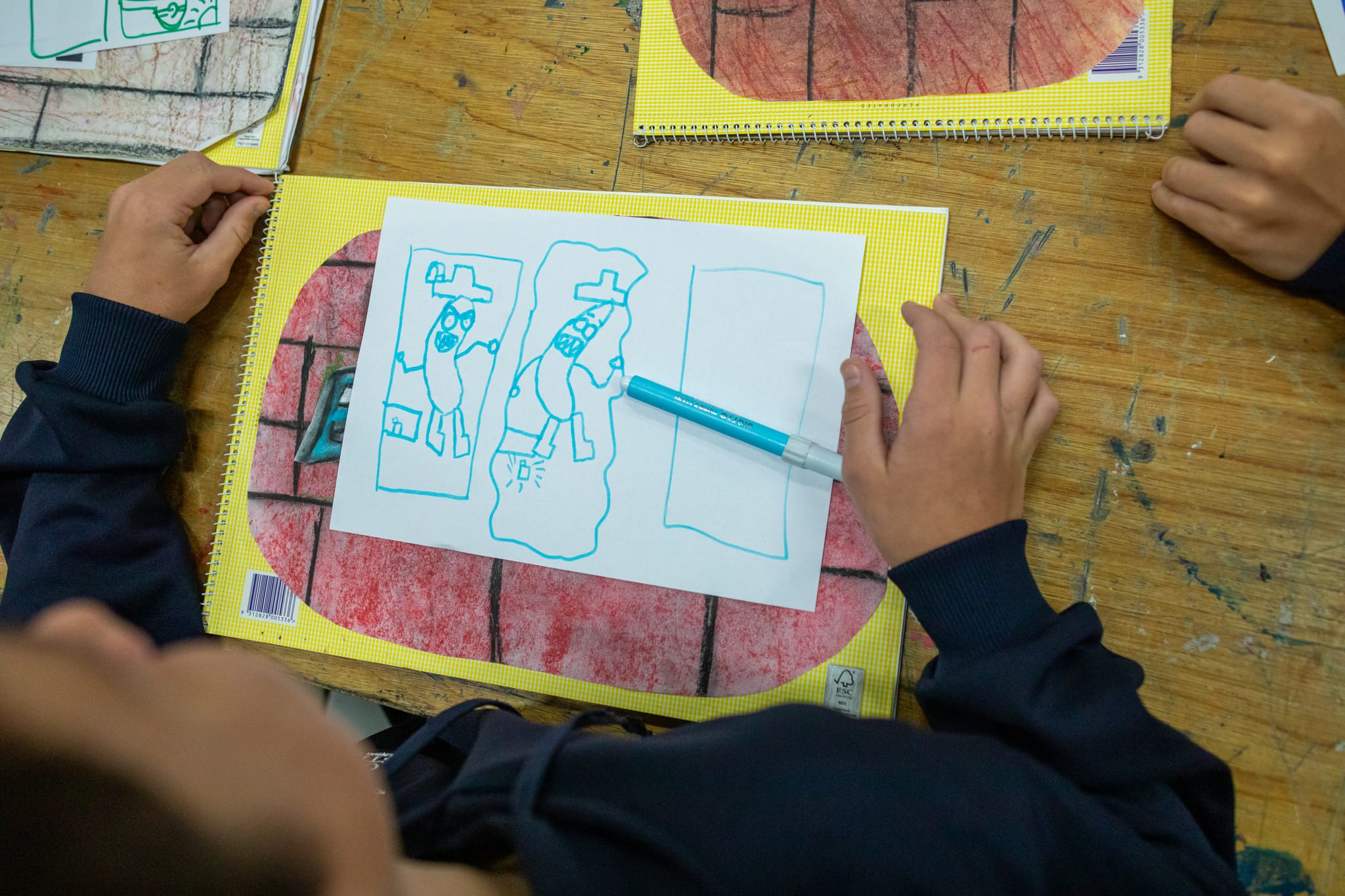
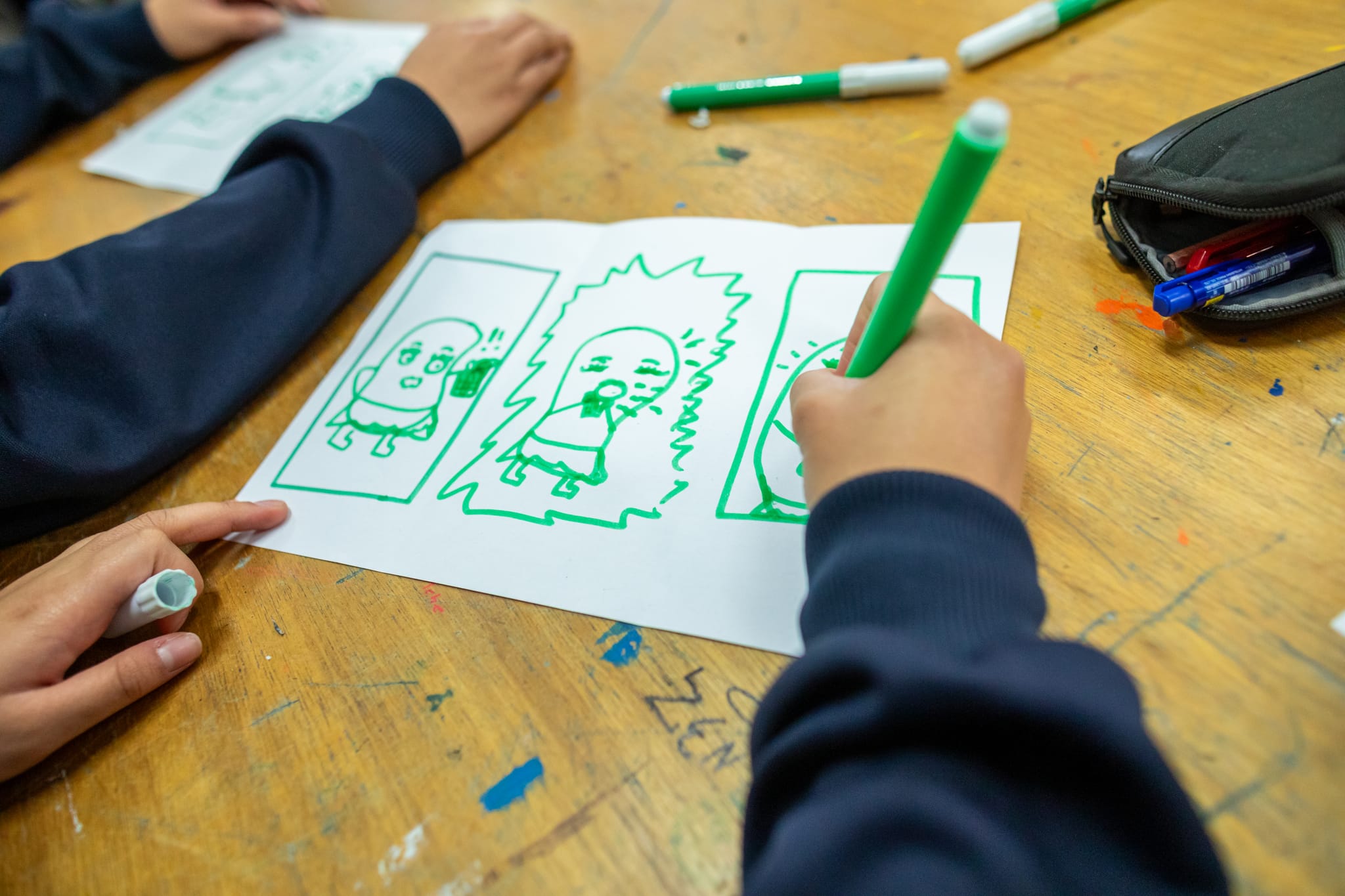
Building on earlier workshops, students identify the messages they want to share, Aśka then helps them find a ‘hook’, using humour, mystery or a narrative to communicate their ideas. Students choose the format that best suits their message, such as a poster, comic, flyer, a three-dimensional piece or even a sticker.
“It’s important to test ideas. We run short exercises to explore how their message will be placed in the world and how it will fit into their peers’ life,” Aśka said.
“Students learn that development is a process. They receive individual feedback on the direction they’ve decided on and refine their ideas, which takes courage.”
For Aśka, the impact goes beyond the classroom.
The Literature Centre's Influence Lab: Arts Against Vaping pilot program at Govenor Stirling Senior High School
The Literature Centre's Influence Lab: Arts Against Vaping pilot program at Govenor Stirling Senior High School
I love the open-ended nature of the pilot
and I love working with teenagers. I can’t
wait for their complex views. But I think
the most exciting thing they’ll realise is
that this is important, not for a grade, but
because it will be part of the real world
and it will have a real impact.