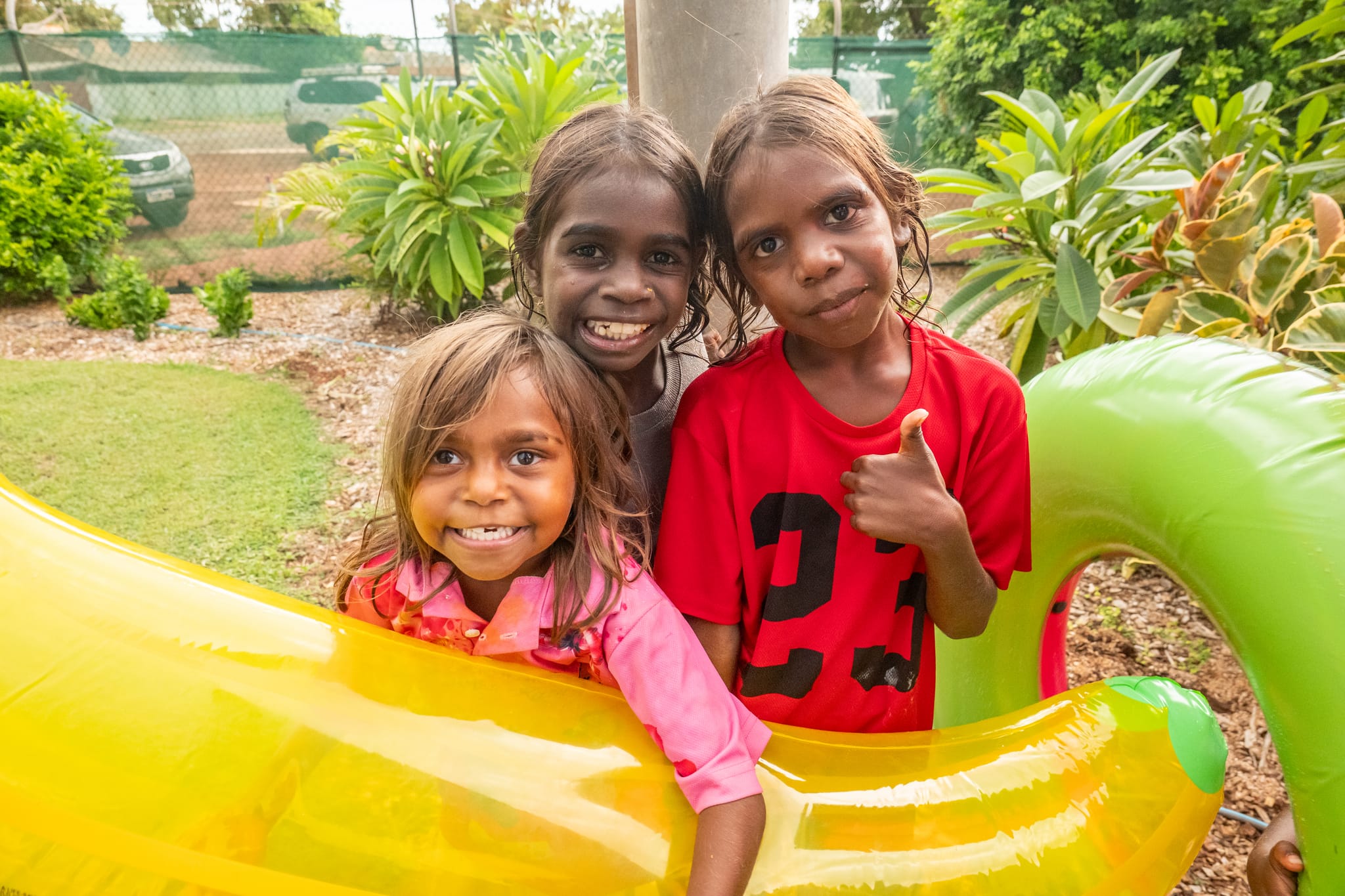
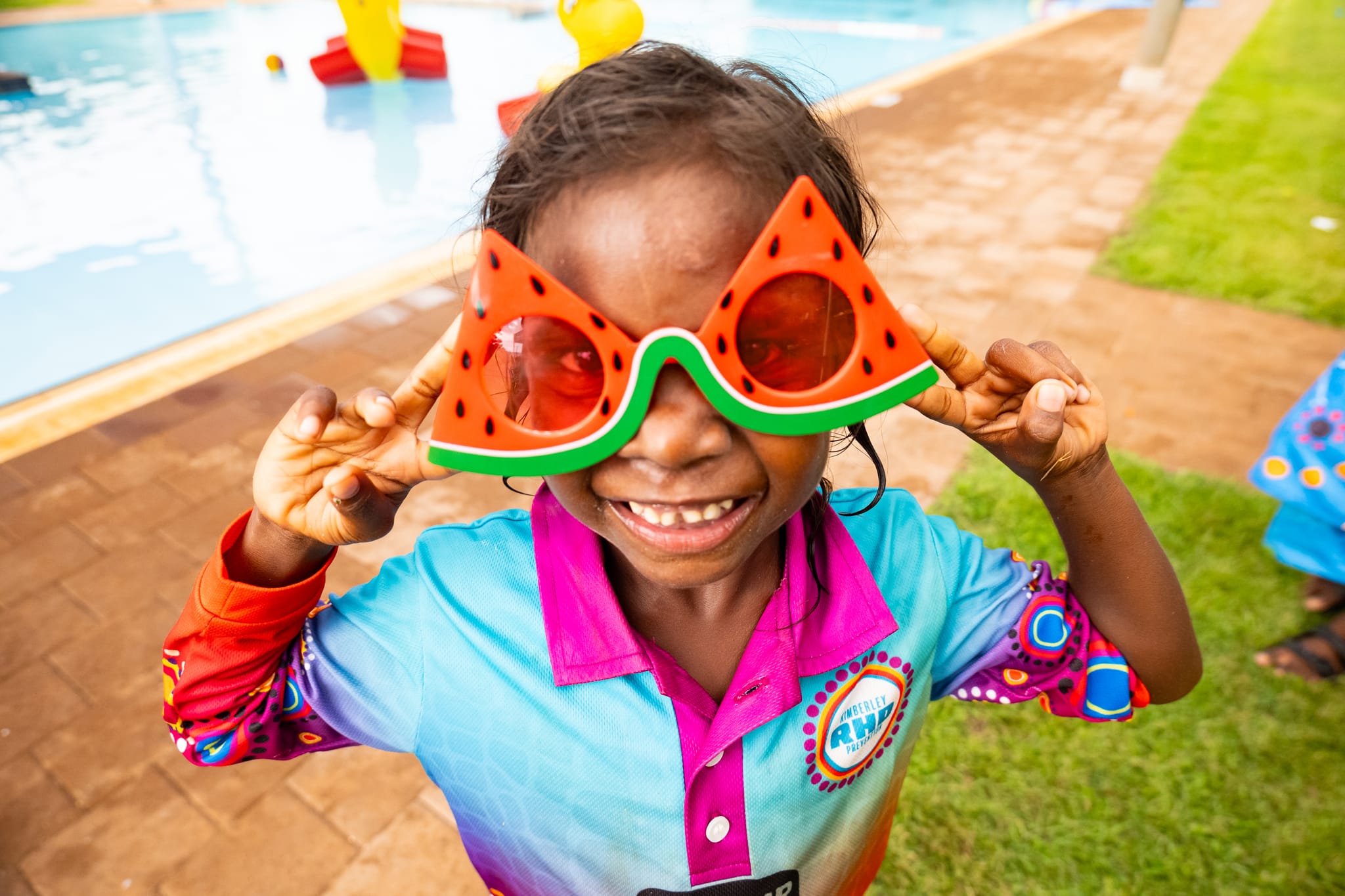
The kids are healthier. The girl who won the overall award this season swam 450 laps over four weeks. You can see they are proud of themselves and, with such a high level of fitness, it’s establishing a benchmark that their bodies will always remember.
Royal Life Saving Society WA Swim for Fruit program Bidyadanga
Something special has been happening for nearly two decades at Bidyadanga, Australia’s largest remote Aboriginal community, 180 kilometres south of Broome. At the community pool, children are confident swimmers, snack on fresh fruit and are supported by families who return day after day. The pool has become a vital community hub — and a powerful setting for lifelong healthy habits.
The change began in 2008 at the Jigalong Swimming Pool, when Royal Life Saving Society WA (RLSSWA) pool managers Scott and Linda Kendall asked teenagers at a loose end to swim ten laps for a piece of fruit. The response was immediate.
Royal Life Saving Society WA Swim for Fruit program Bidyadanga
“Fruit was expensive and hard to come by. The kids loved it more than lollies — they literally dived in,” Scott said.
“We trialled a program of ten laps for a piece of fruit, run over a month, with other prizes at the end.
“The kids swam hundreds of laps and RLSSWA saw the remarkable value and applied for Healthway funding and then rolled it out to five remote communities, including Bidyadanga,” he said.
Eighteen years on, Healthway remains a supporter and Scott and Linda are managing the Bidyadanga pool once again. There’s something for everyone, with baby and toddler sessions, dedicated lap times, women’s fitness sessions, Bronze Medallion training, school carnivals and popular night swims with music. The pool has also become one of the few places young people can get work experience and always have healthy food and drink options available.
“At the kiosk we don’t sell soft drinks or chocolates,” Linda said.
“Instead, we offer popcorn, pea snap crisps, cheese toasties and fruit slushies, which sells out.
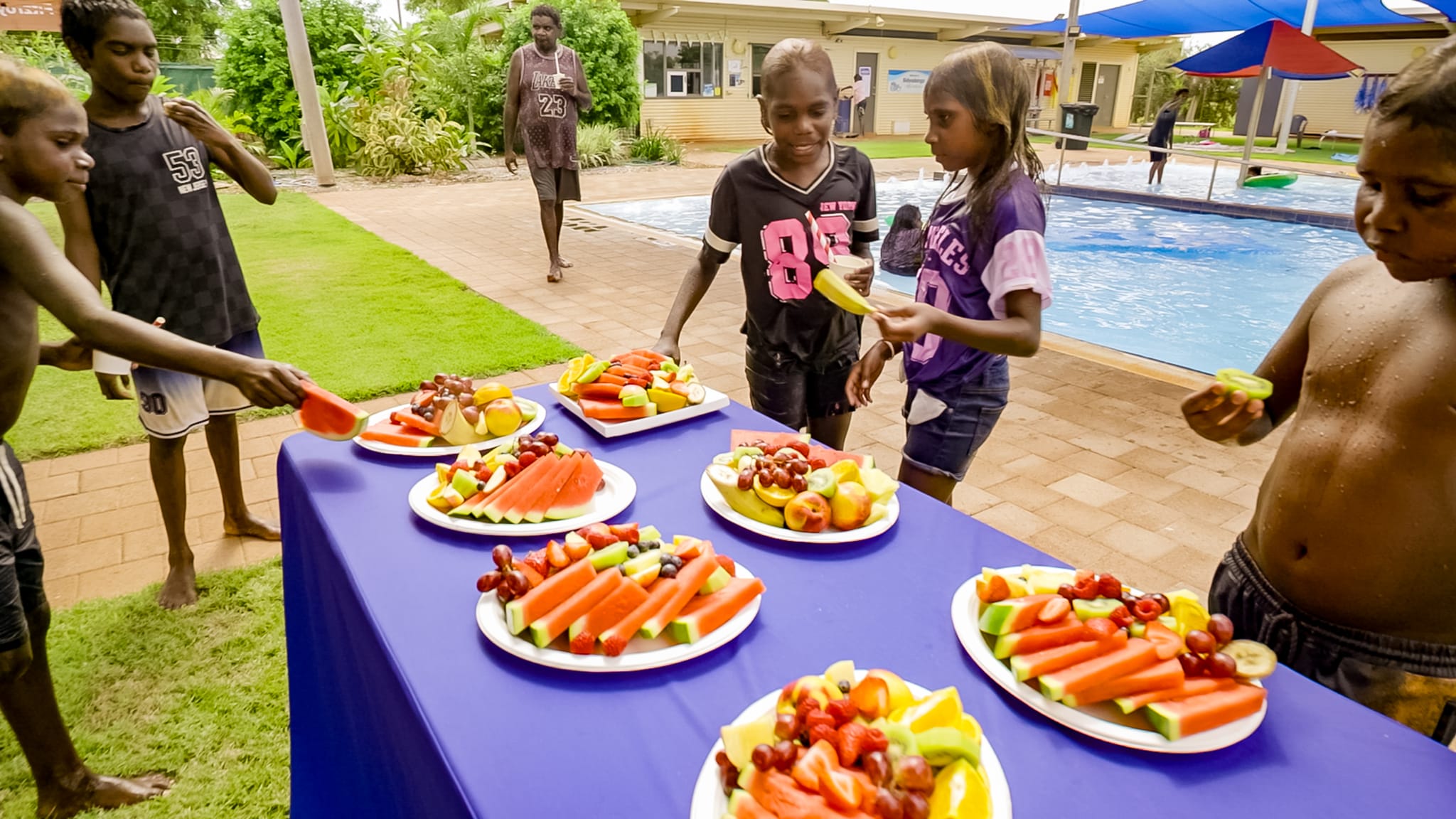
“We’ve upgraded what’s on offer for Swim for Fruit too, by getting a slushie machine. So, while you still get a band signalling a piece of fruit for every ten laps, you can also get a small fruit slushie for every 30 laps.
“Often the kids will bank up their fruit and keep swimming until they have multiple bands and then cash them in for a slushie and pile of fruit. Many kids regularly swim 30-50 laps a session,” she said.
Royal Life Saving Society WA Swim for Fruit program Bidyadanga
All of this has helped make the pool a place where conversations about health and food happen naturally. Linda said, in yarning with the kids, she’ll mention conditions like diabetes and the link to sugar. She knows their relatives often have to live in Broome for dialysis – something which makes an impact when the kids understand the connection. Linda and Scott are seeing how embedding these habits early is making a difference in the long-term.